MarketLens
How Are Geopolitical Tensions Reshaping the Defense Industry Landscape

Key Takeaways
- Geopolitical tensions are driving a "Security Supercycle" in defense, leading to a fundamental re-rating of the sector from a stable, defensive play to a growth engine.
- Lockheed Martin (LMT) and RTX Corporation (RTX) are poised for significant gains due to robust backlogs and critical roles in global conflicts, particularly in missile defense and advanced aircraft.
- Northrop Grumman (NOC) and General Dynamics (GD) offer strong niche exposure to strategic systems and naval assets, respectively, backed by substantial order pipelines and strong operational performance.
How Are Geopolitical Tensions Reshaping the Defense Industry Landscape?
The global defense industry is undergoing a profound transformation, shifting from a "just-in-time" procurement model to a "deterrence economy" driven by structural growth and massive stockpiling. This fundamental re-rating is a direct consequence of escalating geopolitical tensions across multiple fronts, including the ongoing Russia-Ukraine war, persistent U.S.-China tensions in the Indo-Pacific, and the recent dramatic military escalation between the U.S. and Iran. Governments worldwide are now compelled to boost military budgets, recognizing that military preparedness is a structural necessity rather than a reactive measure.
This shift is evident in the numbers: global military expenditure reached an estimated $2.63 trillion in 2025, a significant increase from $2.48 trillion the previous year. This isn't merely a fleeting spike; it's a sustained commitment, reinforced by initiatives like the "Hague Commitment" and NATO members pledging to increase defense spending from 2% to 5% of GDP by 2035. Such long-term commitments ensure a steady pipeline of orders for defense contractors, providing them with stable revenue streams largely insulated from typical economic cycles.
The market has responded by applying a "security premium" to defense stocks, pushing valuations higher. For instance, companies like Lockheed Martin, which historically traded at P/E multiples between 15x and 18x forward earnings, are now seen closer to 31x P/E. This re-rating reflects the market's confidence in the sector's long-term growth potential, fueled by legislative packages like the "One Big Beautiful Bill Act" that front-loaded $113 billion for immediate military modernization, pushing the total 2026 defense budget over $1 trillion.
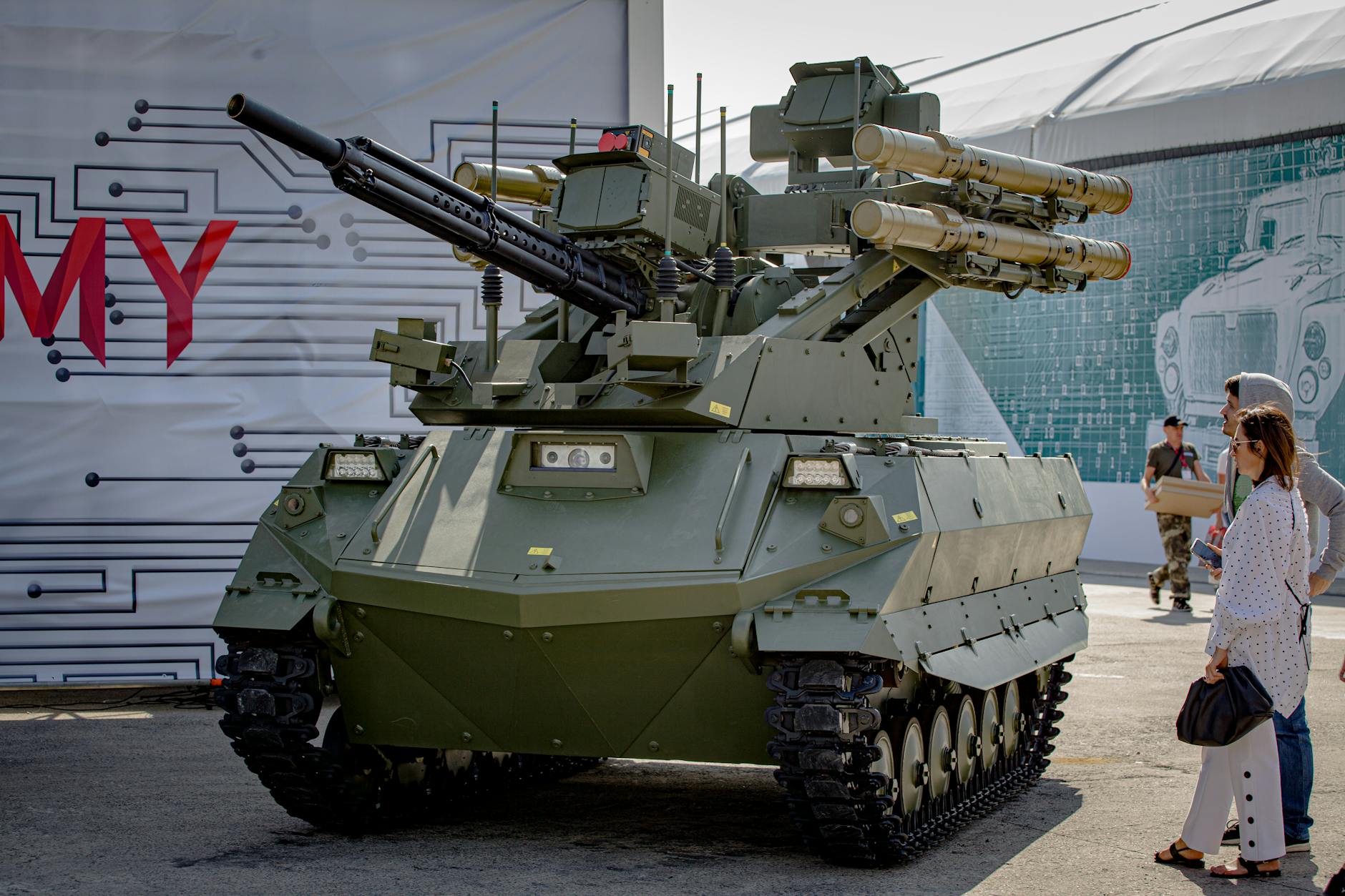
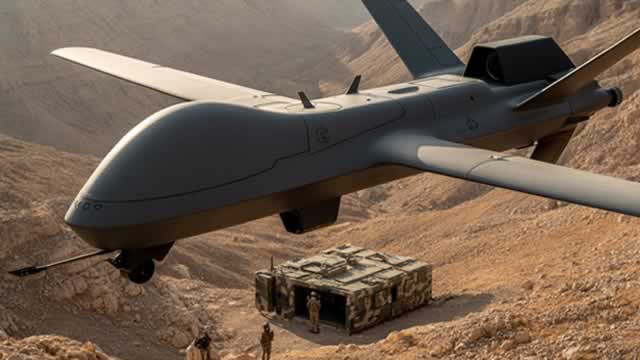
Beyond traditional weaponry, the nature of defense spending is evolving, channeling significant investment into advanced technologies. AI, autonomous systems, drones, cybersecurity, and electronic warfare are now critical areas of focus. This technological shift means companies that prioritize digital infrastructure, invest in talent, and operationalize next-generation capabilities are best positioned for future growth, creating new opportunities for specialized tech firms to integrate AI into existing hardware.
What Does the "Security Supercycle" Mean for Defense Contractors?
The "Security Supercycle" signifies a period of sustained, elevated demand for defense products and services, moving beyond short-term conflict-driven spikes to a more permanent increase in military investment. This environment particularly benefits prime contractors with large backlogs, combat-proven systems, and strong government ties. The emphasis is on modernizing capabilities across air, sea, cyber, and space, ensuring a robust and interoperable defense posture among allies.
This structural growth is underpinned by multi-year government contracts that provide predictable revenue streams, a stark contrast to the volatility seen in other sectors. The commitment from NATO members to significantly increase defense spending by 2035 further solidifies this long-term outlook, ensuring a continuous flow of orders. Companies specializing in command-and-control systems or radar technology, for example, are seeing substantial revenue growth, with some firms aiming for 20%-25% revenue growth in fiscal year 2026.
However, this supercycle also presents challenges, primarily around production velocity and supply chain resilience. The immediate challenge for the defense sector is not securing orders but fulfilling them rapidly. The market is closely scrutinizing "production velocity" metrics in earnings reports, as delays in meeting delivery timelines for critical systems like the PAC-3 or B-21 could temper current valuation premiums. Supply chain fragility, raw material shortages, and the availability of specialized semiconductors remain persistent hurdles.
In response, strategic pivots are already underway. Defense companies are increasingly investing in "attritable" systems—cheaper, mass-produced drones and autonomous vessels—to complement their high-cost platforms. This shift creates new opportunities for specialized tech firms capable of integrating AI into existing hardware. Furthermore, the "Big Five" contractors are actively seeking strategic acquisitions to bring more of their supply chain in-house, aiming to guarantee delivery timelines in an era where on-time delivery is paramount.
Which Defense Giants Are Best Positioned to Capitalize?
In this re-rated defense landscape, several key players stand out, particularly Lockheed Martin (LMT) and RTX Corporation (RTX), given their critical roles in supplying advanced weaponry and defense systems. Lockheed Martin, the world's largest defense contractor, is a prime beneficiary of increased demand for fighter jets like the F-35, missiles, and space systems. The company reported solid 2025 results, including a 6% year-over-year sales increase, a robust free cash flow balance of $6.9 billion, and a record backlog of $194 billion. This substantial backlog provides multi-year revenue visibility and underpins future growth.
Lockheed Martin's Aeronautics segment sales jumped 11.9% to $7.26 billion in Q3 2025, driven by sustained demand. The company secured a $12.5 billion contract for 296 F-35 jets and an approximately $11 billion navy contract for up to 99 CH-53K King Stallion helicopters, alongside a nearly $10 billion contract for Patriot missiles. Management expects continued momentum in 2026, guiding for sales between $77.5 billion and $80 billion, diluted EPS of $29.35 to $30.25, and free cash flow of $6.5 billion to $6.8 billion. Trading at $667.13, LMT has a market cap of $154.37 billion and a P/E of 30.70, reflecting its strong market position.
RTX Corporation, formerly Raytheon, is another major player with diverse revenue streams from both commercial aerospace and defense. In 2025, RTX saw strong demand, with total sales increasing 10% year-over-year to $88.6 billion and adjusted earnings per share rising 10% to $6.29. The company generated $7.9 billion in free cash flow and ended the year with a massive $268 billion backlog, including $107 billion tied to defense programs. RTX's critical role in supplying Israel's sophisticated defense architecture, including interceptors for the Iron Dome and David’s Sling systems, positions it for significant gains.
Management anticipates sustained growth in 2026, with sales ranging from $92 billion to $93 billion, adjusted EPS of $6.60 to $6.80, and free cash flow of $8.25 billion to $8.75 billion. RTX's exposure to both defense modernization and aerospace demand provides diverse revenue streams. Trading at $206.22, RTX has a market cap of $276.81 billion and a P/E of 41.20, indicating strong investor confidence in its future prospects.
What About Northrop Grumman and General Dynamics?
While Lockheed Martin and RTX often grab headlines, Northrop Grumman (NOC) and General Dynamics (GD) are equally compelling players, each with distinct strengths that position them well within the "Security Supercycle." Northrop Grumman, valued at $107.76 billion, is a major U.S. aerospace and defense contractor specializing in stealth aircraft, missile defense systems, and space technologies. The company closed 2025 with strong momentum, reporting better-than-expected fourth-quarter results, with net sales climbing 9.6% year-over-year to $11.7 billion. Adjusted EPS came in at $7.23, up 13.1% compared to the prior-year quarter.
Crucially, Northrop Grumman reported a record backlog of $96 billion at the end of 2025, providing significant revenue visibility and acting as a strong indicator of future growth, especially in an environment of increasing defense spending. For 2026, the company expects sales to be between $43.5 billion and $44 billion. Despite trimming its full-year 2025 sales outlook due to contract timing, Northrop Grumman said it would be more profitable than expected. The company's focus on strategic systems like the B-21 bomber and missile defense makes it a critical asset in the evolving geopolitical landscape. Trading at $759.32, NOC has a P/E of 25.94, reflecting its solid financial performance and strategic importance.
General Dynamics (GD), with a market cap of $98.60 billion, holds a market-leading position in naval and land systems, including submarines, surface ships, and armored vehicles. The company reported full-year 2025 revenue of $52.6 billion, a 10% increase from 2024, and net earnings growth of 11.3%. GD boasts a large backlog of $118 billion and a robust book-to-bill ratio of 1.6x, indicating strong future order intake. It also generated $3.9 billion in free cash flow, highlighting its operational efficiency.
General Dynamics' Electric Boat division is particularly critical as the U.S. Navy prepares for an expanded, permanent presence in the Middle East and Indo-Pacific to secure shipping lanes. Its role in submarine and surface ship maintenance makes it a "must-own" for institutional investors seeking long-term maritime exposure. Trading at $364.67, GD has a P/E of 23.38, making it an attractive option for investors looking for exposure to essential naval and land defense programs. Both NOC and GD benefit from the structural necessity of military preparedness and the modernization cycles underway globally.
What Are the Risks and Valuation Considerations for Investors?
While the defense sector is riding a wave of geopolitical urgency and structural growth, investors must carefully consider inherent risks and current valuation levels. The primary risk remains the concentrated client base, as government procurement policies are subject to political shifts and budget issues. While the current environment suggests increased spending, contract delays or changes in program priorities could temper immediate performance. Northrop Grumman's Q4 2025 earnings call, for instance, highlighted uncertainties in contract timing, with some opportunities not firming up as quickly as anticipated.
Supply chain fragility is another significant operational hurdle. From raw material shortages to semiconductor availability, companies face persistent unpredictability. This fragility not only impacts costs but also delivery credibility, a critical factor in the "deterrence economy" where production velocity is paramount. The strain is expected to intensify as defense primes aim to increase output of various equipment, stressing every tier of the aerospace and defense supplier base. The ability of companies to manage these supply chain issues and attract skilled talent will be crucial for operational efficiency and delivery credibility.
Valuations for many Western defense equities are no longer "deeply undervalued," having rerated significantly since the Russia-Ukraine war. Lockheed Martin's P/E of 30.70 and RTX's P/E of 41.20 suggest that much of the future growth may already be priced in. Investors need to scrutinize backlogs, free cash flow generation, and investments in next-generation technologies to justify these higher multiples. The market is now rewarding defense contractors that integrate high-margin AI and digital backbones into their hardware, leading to "tech-like" valuation multiples.
Despite these challenges, the fundamental backdrop for the industry remains highly supportive. Geopolitical tensions are likely to persist, making military preparedness a structural necessity. This environment favors firms with differentiated capabilities, domestic manufacturing, and a clear line of sight into long-term contracts. For investors, a selective approach, focusing on companies with strong fundamentals, innovation pipelines, and robust execution, will be crucial to capture the lasting growth potential in this evolving sector.
The Road Ahead: A New Era for Defense Investing
The defense sector has undeniably entered a new era, characterized by a fundamental re-rating driven by persistent global instability and a structural shift towards increased military spending. This isn't just a temporary boost from isolated conflicts; it's a long-term commitment to deterrence and modernization, creating a robust tailwind for leading contractors. Investors should prioritize companies with proven capabilities, substantial backlogs, and a clear vision for integrating next-generation technologies.
While current valuations reflect much of this optimism, the ongoing "Security Supercycle" suggests that well-managed defense giants with strong execution capabilities could continue to deliver competitive returns. The strategic challenge for these companies will be scaling production fast enough to meet the ambitious "Dream Military" budget proposals, which seek to authorize staggering levels of spending. This dynamic underscores the importance of supply chain resilience and strategic acquisitions to ensure delivery timelines.
Ultimately, the defense industry offers a unique blend of "recession-resistant" revenue and high growth potential, making it an attractive segment for investors seeking stability and long-term capital appreciation in an uncertain world. A diversified approach, perhaps through leading defense ETFs or a concentrated portfolio of top-tier primes, could be a prudent strategy to navigate this evolving landscape.
Want deeper research on any stock? Try Kavout Pro for AI-powered analysis, smart signals, and more. Already a member? Add credits to run more research.
Related Articles
Category
You may also like


European Defense Companies Soar on Middle East Conflict

Geopolitics In The Age Of AI

XAR And SHLD: Chips And Security, Greenland Crisis The End Of NATO?
Breaking News
View All →Featured Articles
Top Headlines

Is Microsoft Back on Its Way to the $4 Trillion Club? Wall Street Seems to Agree on an Answer.

Amazon nears deal to buy Globalstar, Bloomberg News reports

Wedgewood Partners Q1 2026 Top-Performing Contributors And Detractors

A Claude Agent Bought These 2 Trillion-Dollar Artificial Intelligence (AI) Stocks Before the Ceasefire With Iran. Now They Are Both Rallying -- Is It Too Late to Buy?